
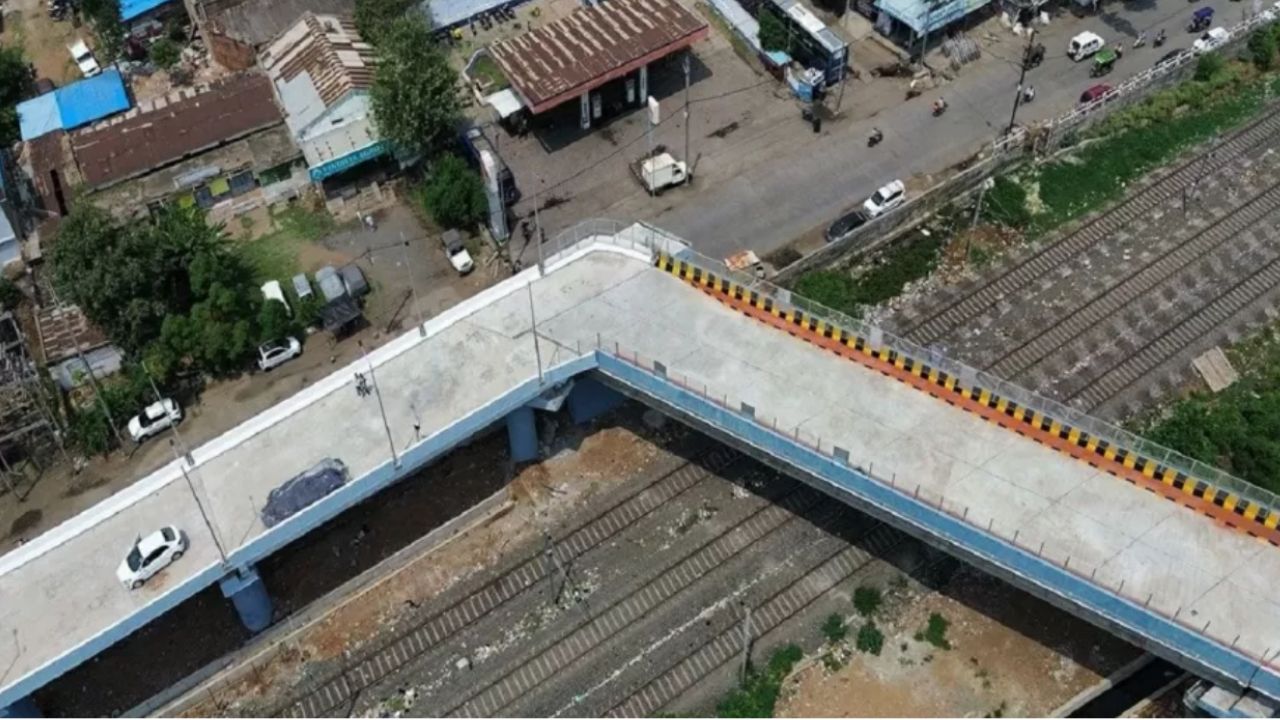
A sharp-angled bridge in Bhopal, India, is going viral around the world — but not exactly for being a benchmark in modern architecture.
+ Jennifer Aniston’s Japanese-Style Stone Basins: How to Recreate the Look for Just $33
The structure, part of a newly constructed railway bridge, gained fame for featuring an almost right-angle curve, around 90 degrees, defying all basic principles of flow and safety in urban design.
The project turned into a national scandal, raising serious questions about planning, aesthetics, and functionality in contemporary cities.
The Bhopal Bridge Case: A Design Turned Meme
The project, located in the Aishbagh neighborhood in Bhopal, was completed after years of construction and millions invested. The bridge, approximately 648 meters long, connects two major urban areas and was intended to ease local traffic. But what drew attention was the unusual layout: an abrupt 90-degree curve that forces vehicles to drastically reduce speed to avoid accidents.
The bridge became international news after images of the curve went viral on social media. Users called the structure a “video game design” and “a maze-worthy construction,” and questioned how such a design error was approved by engineers and local authorities. Following the backlash, at least seven engineers were suspended, and a redesign is already underway.
Forget the Chenab Rail Bridge, here’s the real engineering masterpiece from Bhopal! pic.twitter.com/IUfVizRi8h
— Manas Muduli (@manas_muduli) June 11, 2025
Dangerous Curves and Urban Design: When Aesthetics Don’t Excuse the Mistake
For professionals working in interior design, architecture, and urbanism, the episode is a warning about the boundaries between aesthetics, functionality, and safety. In any urban project, the layout must respect natural movement flows — especially in structures involving high-speed vehicles.
The 90-degree curve in the Bhopal bridge not only breaks visual flow but also impairs circulation — and shows what happens when technical decisions ignore basic principles of ergonomics and spatial proportion. In the design world, it’s equivalent to a poorly placed staircase or a narrow, dimly lit hallway.
What We Can Learn from the Bhopal Bridge Mistake
While the case may seem distant from interior design, it offers valuable lessons for any creative professional:
- Planning matters more than improvisation: the mistake was not just aesthetic, but technical. In interiors, this would be like ignoring circulation, lighting, or ventilation in a layout.
- Form and function must go hand in hand: there’s no use creating something visually striking if it’s uncomfortable, unsafe, or confusing to use.
- Aesthetics must serve well-being: in both urban spaces and residential projects, design should welcome and make life easier — not just impress visually.
Architecture and Public Responsibility
The Indian bridge scandal also reinforces the importance of social responsibility in design. At a time when urban planning is moving toward greener, more fluid, and people-centered solutions, poorly planned public projects directly affect people’s quality of life. Mistakes like this erode trust in architecture as a tool for social transformation.
Design Is Everywhere — Even in Mistakes
The Bhopal viaduct made headlines as a textbook example of what *not* to do in urban design. But for designers, architects, and decorators, the episode serves as a powerful reminder of the importance of integrated planning, of balancing aesthetic sensitivity with technical rigor, and of how every detail matters — whether in a single room or an entire city.
This content was created with the help of AI and reviewed by the editorial team.
